
How to Use a Carbonless Waybill for Global Shipping?
Global shipping depends on documents that remain clear, consistent, and easy to verify. A Carbonless Waybill supports that process without requiring a copier, printer, or digital connection at every handover. Its pressure-sensitive sheets transfer writing from the top copy to the underlying pages. One signature can create matching records for the shipper, carrier, and consignee.
In practice, careful preparation matters more than the paper itself. Confirm the sender’s address, consignee details, package count, weight, handling notes, and transport reference. Write firmly, but avoid pressing so hard that lower copies become difficult to read. Check every copy before the shipment leaves the warehouse. Small errors become expensive later.
Supply-chain expert Martin Christopher wrote, “Supply chains compete, not companies.” That observation also applies to shipping documentation. A missing signature or blurred delivery note can interrupt cooperation between several businesses. The Carbonless Waybill should therefore be treated as an operational control, not simple stationery. Keep copies flat, dry, and protected from heat. Store them according to your company’s record-retention procedures.
There is room for improvement.
Some teams still rely on handwriting alone, even when digital tracking is available. That approach can create avoidable uncertainty. Use the waybill alongside carrier systems, barcode scans, and documented checks. Requirements differ by route, carrier, and cargo type, so verify current instructions before dispatch. This guide explains practical handling steps while recognizing one limitation: carbonless copies preserve information, but they cannot correct careless information.
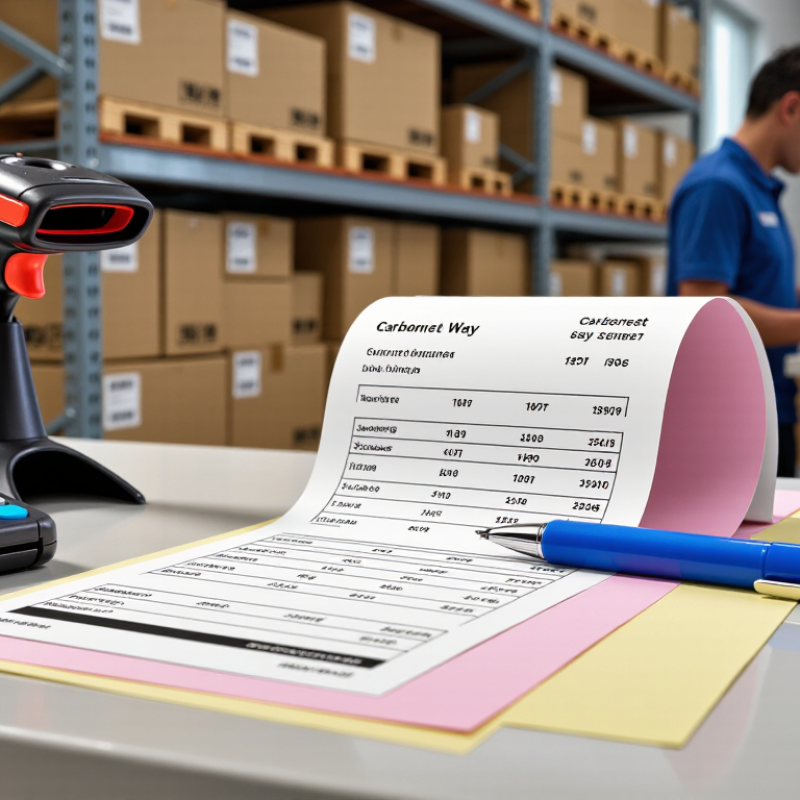
What a Carbonless Waybill Is and How It Works
A carbonless waybill is a multi-part shipping document that creates duplicate copies without carbon paper. Its sheets contain pressure-sensitive coatings. Writing on the top sheet transfers the same details to the pages underneath. It works by pressure. A pen, not ink, activates tiny chemical capsules between the layers. The shipper, carrier, and receiver can then keep matching records of the same consignment.
For global shipping, the sender writes the shipper’s address, receiver’s address, package count, weight, dimensions, and handling instructions. Customs-related information should match the commercial invoice and packing list. Clear block letters help prevent delays caused by unreadable entries. After completion, the copies are separated and distributed according to the carrier’s procedure. Keep the stack flat. Folding can create unwanted marks or missing text.
A practical warehouse check is simple: compare every copy before the parcel leaves the dock. Confirm numbers, addresses, and signatures. Details matter. Uneven pressure may produce a faint copy, especially with a worn pen or hard surface. I have found that rushed handwriting creates more correction work than the form saves. Some destinations or carriers may require additional documents or electronic records. Requirements can change, so verify them before dispatch. A carbonless waybill improves traceability, but it does not replace careful data entry or proper shipment packaging.
How to Use a Carbonless Waybill for Global Shipping? - What a Carbonless Waybill Is and How It Works
| Data Dimension | Carbonless Waybill Information | Global Shipping Application | Practical Note |
|---|---|---|---|
| Definition | A multi-part shipping document that creates duplicate copies without carbon paper. | Used to record shipment details and provide document copies to parties handling the cargo. | It is a paper document system, not an electronic transport record. |
| How It Works | Pressure from writing on the top sheet activates microcapsules and a coating on the following sheet, reproducing the written information. | The same shipment data can be transferred to several copies during preparation. | Use a firm, even writing pressure and place the forms on a flat surface. |
| Typical Form Structure | Common sets contain a top sheet and one or more duplicate sheets, with each copy assigned to a different party. | Copies may support the shipper, carrier, consignee, warehouse, or delivery record. | The exact number and color of copies depend on the shipment process. |
| Core Shipment Data | Usually includes shipper, consignee, pickup and delivery locations, contact details, reference numbers, package count, weight, and description of goods. | Helps identify and handle cargo across multiple transport stages. | Descriptions should be specific enough for handling and document matching. |
| Package Details | Records the number of cartons, pallets, crates, or other handling units, along with gross weight and dimensions when required. | Supports loading plans, freight rating, warehouse checks, and delivery verification. | Use consistent units, such as kilograms and centimeters, throughout the shipment documents. |
| International Trade Data | May reference the country of origin, commodity classification, customs value, and trade terms when applicable. | Provides supporting information for customs review and document consistency. | A waybill normally does not replace documents required by customs, such as a commercial invoice or permits. |
| Transport Reference | Includes a shipment number, booking reference, purchase order number, or other identifier. | Allows staff to match the paper waybill with transport, warehouse, and order records. | Use one unique reference consistently across all related documents. |
| Signature and Acceptance | May include signature, printed name, date, and time fields for pickup or delivery acknowledgment. | Creates a paper record of handover, receipt, or visible package condition. | A signature confirms receipt or handover only according to the terms stated on the document. |
| Shipment Workflow | Prepare the form, verify the information, separate the copies, attach or distribute them, and retain the required record. | Supports a consistent handoff from shipper to carrier, terminal, warehouse, and consignee. | Check every copy before separation because missing or incomplete data can be difficult to correct later. |
| Main Advantages | Produces readable duplicate records in one writing operation and does not require a separate carbon sheet. | Useful where paper documentation, rapid handover, or limited digital access is required. | It can reduce repetitive handwriting and help keep shipment details aligned across copies. |
| Limitations | Copies can be affected by weak writing pressure, moisture, abrasion, poor storage, or illegible handwriting. | Paper records may not provide real-time tracking or automatic data validation. | Use digital shipment records in parallel when electronic visibility or regulatory filing is required. |
| Error Control | Corrections should remain clear and traceable on every relevant copy. | Accurate records help prevent mismatches in consignee details, package counts, weights, and reference numbers. | Do not obscure an error; follow the carrier or internal correction procedure and obtain initials where required. |
| Storage and Handling | Store unused forms flat, dry, and away from excessive heat, pressure, and direct sunlight. | Protects legibility before the form is used and while retained as a shipment record. | Keep completed copies protected from moisture and unauthorized access. |
| Best Use Case | Shipments requiring several paper copies and a straightforward manual handover process. | Suitable for road, air, sea, or multimodal workflows when accepted by the parties involved. | Confirm document requirements with the carrier, destination country, and customs authorities before dispatch. |