How Do Plant Growth Regulators Enhance Crop Yields Globally?
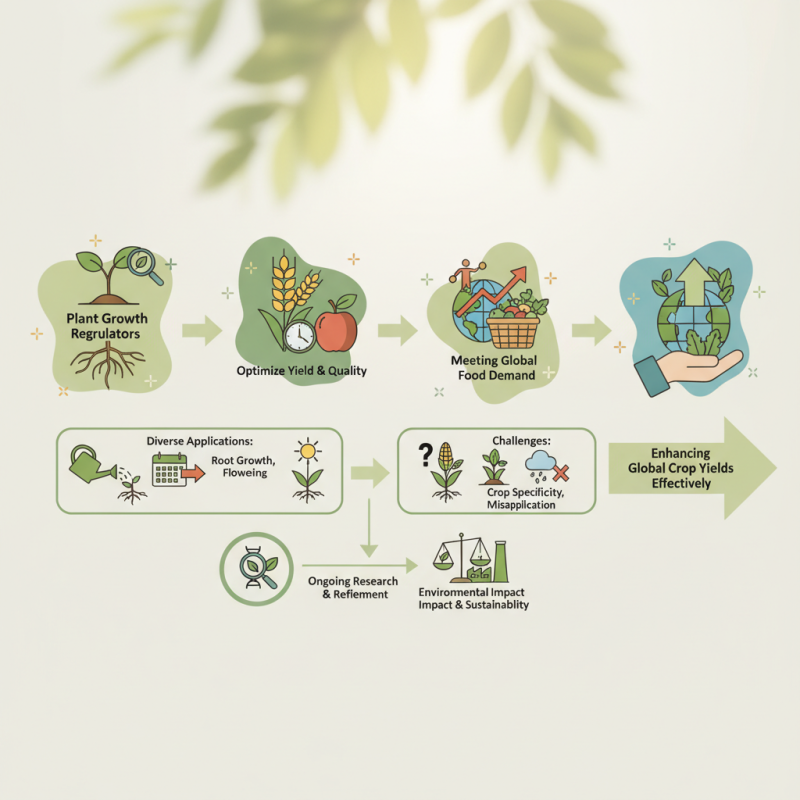
Plant Growth Regulators (PGRs) have become essential in modern agriculture. These substances influence plant growth and development. They optimize yield and improve crop quality globally. PGRs can help farmers meet the increasing food demand. As populations grow, traditional farming methods face limitations. Thus, PGRs offer viable solutions.
Their application varies widely. For instance, they can promote root growth or enhance flowering. Some PGRs reduce the time between planting and harvesting. This acceleration can boost productivity significantly. Farmers observe the effectiveness of these regulators in diverse climates and soils. Yet, challenges in usage remain. Not all PGRs work equally well for every crop type. Misapplication or over-reliance on PGRs can lead to unexpected results.
Research continues to unlock the full potential of PGRs. Scientists aim to refine these substances for better efficacy. It is crucial to consider environmental impacts and sustainability. As with any agricultural practice, the balance of benefits and potential drawbacks must be carefully assessed. Understanding the role of plant growth regulators is key to enhancing global crop yields effectively.
Overview of Plant Growth Regulators and Their Types
Plant growth regulators (PGRs) play a crucial role in enhancing crop yields. These substances influence various growth processes in plants. They can promote growth, modify flowering, and improve fruit set. Farmers worldwide are increasingly relying on PGRs to optimize agricultural output.
There are several types of PGRs, including auxins, gibberellins, cytokinins, and ethylene. Auxins are known for their role in cell elongation and rooting. Gibberellins can significantly increase seed germination and fruit size. Cytokinins are effective in delaying aging and promoting cell division. Ethylene, a gaseous hormone, influences fruit ripening and stress responses.
Using PGRs requires careful consideration. Over-reliance on these substances may lead to unintended consequences. For instance, excessive use of growth regulators can distort normal growth patterns. Some PGRs may even reduce a plant’s natural resistance to pests. Thoughtful application can maximize benefits while minimizing risks.
Mechanisms of Action of Plant Growth Regulators in Crop Enhancement
Plant growth regulators (PGRs) play a vital role in enhancing crop yields by influencing various physiological processes. Their mechanisms of action are diverse, impacting plant growth, development, and stress responses. For instance, auxins promote cell elongation and differentiation, crucial for root and shoot development. A report from the Food and Agriculture Organization (FAO) indicates that PGRs can increase crop yields by up to 30% in some regions, which highlights their significance in agronomy.
Moreover, gibberellins are another group of PGRs that stimulate seed germination and flowering. They can help crops adapt to environmental stresses like drought or excessive moisture, increasing resilience. Research shows that integrating PGRs can lead to improved photosynthesis, resulting in greater biomass and yield potential. However, the efficacy of PGRs can vary based on crop type, application timing, and environmental conditions, necessitating careful management.
Despite the benefits, the use of PGRs is not without controversy. Some studies raise concerns about the long-term effects on soil health and biodiversity. Farmers face challenges in understanding how to apply these substances effectively and sustainably. Ongoing research aims to address these uncertainties while maintaining the PGRs' potential to significantly boost global food production.
How Do Plant Growth Regulators Enhance Crop Yields Globally?
| Crop Type | Growth Regulator | Mechanism of Action | Yield Increase (%) |
| Wheat | Gibberellins | Stimulates stem elongation and promotes flowering | 10-20% |
| Corn | Auxins | Promotes root growth and fruit development | 15-25% |
| Tomato | Cytokinins | Enhances cell division and delays senescence | 20-30% |
| Rice | Abscisic Acid | Regulates water usage and stress responses | 5-15% |
| Soybean | Ethylene | Regulates ripening and promotes flowering | 10-20% |
Impact of Plant Growth Regulators on Crop Yield and Quality
Plant growth regulators (PGRs) play a significant role in enhancing crop yield and quality. These substances influence various physiological processes in plants, leading to improved growth patterns. By regulating hormones within plants, PGRs can promote root development, enhance flowering, and stimulate fruit setting. Such advancements are crucial in increasing the productivity of crops under various environmental conditions.
Research shows that PGRs can effectively modify plant responses to stress factors like drought or salinity. They help plants adapt and survive adverse conditions. However, the application of PGRs requires careful consideration. Overuse can lead to unpredicted effects on plant health and soil ecology. It's essential for farmers to understand optimal application rates and timing.
Variability in crop response to PGRs can be puzzling. Factors like species, growth stage, and environmental conditions all play a part. While some crops may thrive with PGRs, others might not benefit as expected. This unpredictability necessitates ongoing research and adaptation. As farmers strive to maximize yields, balancing PGR use with sustainable practices remains a critical challenge.
Global Adoption and Economic Implications of Plant Growth Regulators
The adoption of plant growth regulators (PGRs) has surged globally, driven by the need for increased food production. Farmers are exploring different PGRs to enhance crop yields. These substances can help plants respond to environmental stress and optimize growth. They also promote better flowering and fruiting, which ultimately leads to higher harvests.
In various regions, the economic implications of using PGRs are significant. Increased yields can elevate farmers' incomes and support local economies. However, the reliance on such products raises concerns. Over-dependence might lead to reduced crop biodiversity. There is also a need for better education on PGRs, ensuring farmers understand their benefits and risks.
The use of PGRs is not without challenges. Farmers may face issues like inconsistent results under different conditions. Some regions may lack access to technical resources and expertise. Addressing these gaps could lead to more sustainable practices. Collaborative efforts among agricultural stakeholders are essential for responsible PGR use. Balancing economic growth with environmental stewardship remains a priority.
Future Trends and Research Directions in Plant Growth Regulation Technology
Innovations in plant growth regulation technology aim to enhance global crop yields. Researchers focus on improving plant hormones, which can streamline growth. Tailoring these hormones could make crops more resilient to environmental stress. This could contribute to food security as climate changes accelerate.
Tips: Consider local conditions when applying growth regulators. Not every method suits every crop. Remember, trial and error often leads to the best results.
Future research points toward combining natural and synthetic regulatory methods. This can maximize efficiency and sustainability. There's potential in integrating growth regulators with precision agriculture tools. However, the efficacy of these combinations needs thorough study.
Tips: Always document your results. Understanding what works—and what doesn't—is crucial for advancement. Engage with peers to share findings and experiences.