How to Choose Food Packaging Equipment for Your Business
Choosing the right food packaging equipment can shape your production speed, product quality, and daily operating costs. A suitable machine should fit your product, packaging material, output targets, and available workspace. A filling machine for thick sauces behaves differently from one designed for dry snacks. Small details matter. Product temperature, viscosity, moisture, and container size can change equipment performance.
Begin with your actual production needs, not the most impressive machine brochure. Measure current output, peak demand, changeover frequency, and labor requirements. Check whether operators can clean the equipment safely and adjust it without excessive downtime. Sanitary design, accurate dosing, reliable sealing, and accessible replacement parts deserve careful attention. Equipment should also support applicable food safety and workplace requirements. Independent testing and documented manufacturer specifications can strengthen your decision.
A practical trial often reveals more than a polished sales presentation. Watch how the machine handles imperfect products, uneven containers, and rushed changeovers. Ask for maintenance records, service response times, warranty terms, and operator training details. Consider the full cost, including installation, utilities, film waste, cleaning, repairs, and future upgrades. The cheapest option may become expensive after repeated stoppages.
No selection is perfect. Even experienced teams can underestimate cleaning time or operator learning curves. A detailed checklist helps, but it cannot replace hands-on evaluation. Speak with current users when possible. Their comments may expose noise, difficult access points, or software limitations that brochures overlook. The best choice is dependable, practical, and flexible enough for your business’s next stage.
Define Your Food Packaging Goals and Product Requirements
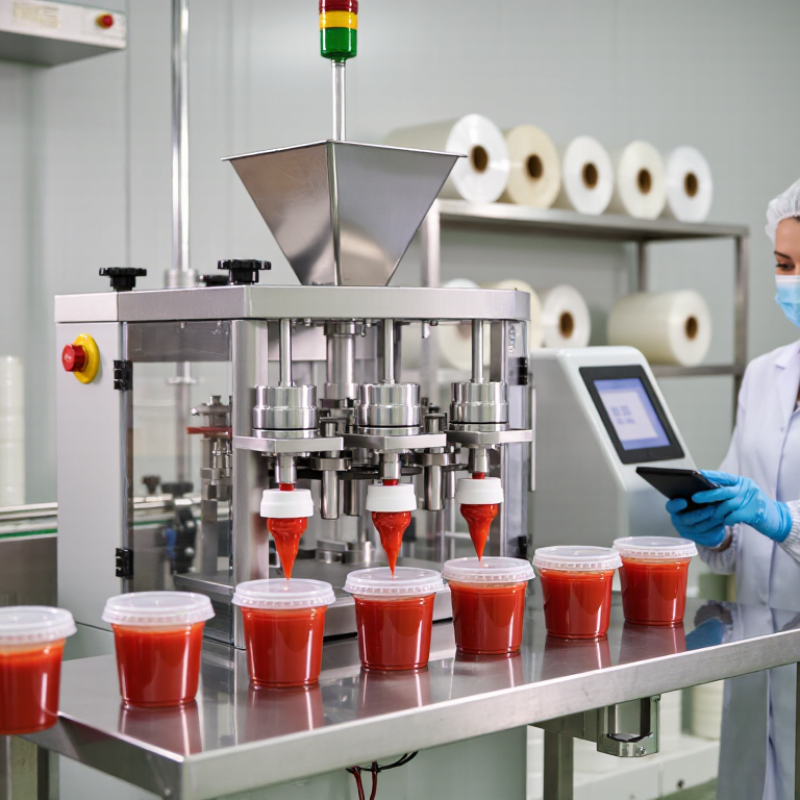
Choosing food packaging equipment starts with a clear definition of your product and business goals. The first specification is rarely complete. Product temperature, viscosity, size, shape, and surface moisture directly affect filling and sealing performance. A chilled sauce may need different handling from dry grains. Record target output, acceptable package weight variation, changeover time, cleaning frequency, and available floor space. Include real samples, not only drawings. A pilot test can reveal leaks, crushed products, or awkward operator movements before installation.
Your goals should also reflect waste reduction and operational risk. The FAO’s The State of Food and Agriculture 2019 estimated that 14% of food is lost between harvest and wholesale. Packaging cannot solve every cause, but accurate dosing and reliable seals can reduce avoidable losses. The UNEP Food Waste Index Report 2024 estimated 1.05 billion tonnes of food waste in 2022, showing why portion control and protection deserve serious attention. Ask whether the equipment supports recyclable formats, safe product contact, traceability, and consistent inspection. Do not overstate future demand. A machine sized for optimistic forecasts may sit underused, while a low-capacity system can restrict growth. Define today’s volume, seasonal peaks, labor limits, and the next realistic product change. Leave room for revision. Specifications evolve.
How to Choose Food Packaging Equipment for Your Business - Define Your Food Packaging Goals and Product Requirements
| Product Category | Typical Product Characteristics | Recommended Packaging Format | Typical Throughput Target | Suitable Equipment | Key Product Requirements | Important Packaging Goals | Selection Considerations |
|---|---|---|---|---|---|---|---|
| Powdered Foods | Free-flowing or non-free-flowing powders such as flour, spices, drink mixes, and nutritional powders. | Pouches Sachets Stand-up bags Jars | 20–80 packages per minute for small and medium production lines. | Auger filler, vertical form-fill-seal machine, premade pouch filler, or jar filling system. | Consistent bulk density, controlled dust, accurate dosing, and protection from moisture. | High filling accuracy, clean operation, extended shelf life, and reduced product loss. | Select an auger size according to powder density and particle size. Dust extraction may be required for fine powders. |
| Granular Products | Dry products with relatively uniform particles, including rice, grains, seeds, beans, and snack pieces. | Pillow bags Gusseted bags Retail pouches Bulk bags | 30–100 packages per minute, depending on product size and target weight. | Multihead weigher, linear weigher, volumetric cup filler, or premade bag packing machine. | Stable flow, limited breakage, accurate target weight, and resistance to segregation. | Fast weighing, consistent portions, low giveaway, and reliable sealing. | Use a multihead weigher for high speed and accuracy. Consider product fragility and hopper configuration before selection. |
| Fresh Produce | Fruits, vegetables, leafy greens, and other products with high moisture content or irregular shapes. | Trays Flow packs Perforated bags Modified-atmosphere packs | 15–60 packages per minute, depending on product handling and inspection requirements. | Tray sealer, flow-wrapper, weigh-price labeling system, or produce bagging machine. | Gentle handling, ventilation, condensation control, and accurate portioning. | Product freshness, reduced bruising, attractive presentation, and controlled respiration. | Choose food-contact surfaces that are corrosion-resistant and easy to wash down. Film breathability may be critical. |
| Frozen Foods | Frozen vegetables, prepared meals, seafood, meat products, and frozen snack foods. | Frozen pouches Vacuum bags Trays Cartons | 20–70 packages per minute for common retail pack sizes. | Multihead weigher, vertical bagger, horizontal flow-wrapper, vacuum packer, or tray-sealing machine. | Low-temperature film performance, reliable seals, frost tolerance, and accurate weighing. | Leak prevention, freezer durability, product protection, and stable production in cold areas. | Verify that sealing jaws, belts, sensors, and control components can operate in low-temperature and high-condensation environments. |
| Liquid and Semi-Liquid Foods | Sauces, dressings, oils, beverages, soups, dairy products, and viscous fillings. | Bottles Cups Pouches Cans | 20–120 containers per minute, depending on viscosity, filling volume, and container design. | Piston filler, pump filler, gravity filler, cup filler, bottle filler, or pouch filling machine. | Controlled viscosity, accurate volume, minimal dripping, hygienic transfer, and temperature stability. | Fill accuracy, reduced spillage, hygienic operation, and consistent product appearance. | Match the pump and nozzle design to viscosity and particulate content. Heated hoppers may be needed for some products. |
| Bakery Products | Bread, rolls, pastries, cookies, cakes, and other products that may be fragile or prone to moisture loss. | Flow packs Paper bags Cartons Trays | 30–150 packages per minute, based on product size and loading method. | Horizontal flow-wrapper, cartoner, tray loader, bag inserter, or case packer. | Gentle product transfer, proper alignment, moisture and oxygen control, and protection from crushing. | Product appearance, freshness retention, high line speed, and low handling damage. | Confirm infeed spacing, conveyor design, film seal strength, and the equipment’s ability to handle irregular product shapes. |
| Meat and Seafood | Fresh or processed meat, poultry, fish, and seafood products with high hygiene and temperature-control needs. | Vacuum packs MAP trays Thermoformed packs Shrink bags | 10–60 packages per minute, depending on product size, format, and inspection steps. | Vacuum chamber machine, thermoformer, tray sealer, skin packer, or modified-atmosphere packaging system. | Sanitary design, temperature control, strong seals, oxygen reduction, and resistance to liquid contamination. | Food safety, shelf-life extension, leak reduction, and product presentation. | Prioritize washdown capability, stainless-steel construction, drainage, tool-free access, and compatibility with cleaning procedures. |
| Ready Meals | Chilled or frozen complete meals containing multiple components, sauces, grains, vegetables, or proteins. | Sealed trays Microwaveable trays Retort pouches Cartons | 15–80 packages per minute, depending on filling sequence and number of ingredients. | Multi-lane tray filler, volumetric filler, tray sealer, lidding machine, or cartoning system. | Multiple portion sizes, accurate component placement, leak-proof seals, and compatibility with heating methods. | Consistent meal composition, attractive presentation, safety, and labor reduction. | Evaluate the number of filling stations, recipe changeover time, tray dimensions, and the need for metal detection or checkweighing. |
| Snack Foods | Chips, nuts, popcorn, extruded snacks, dried fruit, and other lightweight or fragile products. | Pillow bags Stand-up pouches Canisters Single-serve sachets | 40–200 packages per minute for high-speed retail applications. | Multihead weigher, vertical bagger, nitrogen-flushing system, premade pouch machine, or canister filler. | Product fragility, low bulk density, oxygen sensitivity, static control, and accurate target weight. | High speed, low product breakage, reduced oxygen exposure, and controlled giveaway. | Consider weighhead volume, discharge height, film properties, nitrogen-flushing capability, and seal contamination control. |
| Dairy Products | Yogurt, cream, soft cheese, shredded cheese, butter, and other temperature-sensitive products. | Cups Tubs Foil-lid containers Pouches | 30–180 containers per minute, depending on fill volume and sealing format. | Cup filler and sealer, piston filler, volumetric filler, tub filler, or pouch packaging machine. | Hygienic filling, temperature control, accurate volume, clean lid placement, and reliable hermetic sealing. | Sanitation, consistent fill levels, extended shelf life, and attractive labeling surfaces. | Confirm clean-in-place or washdown requirements, product viscosity range, container tolerance, and seal inspection options. |
| Shelf-Stable and Retort Foods | Canned meals, retort sauces, preserved vegetables, pouches, and products requiring long ambient storage. | Cans Retort pouches Glass jars Retort trays | 20–120 containers per minute, depending on sterilization and handling stages. | Can filler and seamer, retort pouch filler and sealer, jar filler and capper, or tray sealer. | Thermal-process compatibility, airtight seals, accurate headspace, and packaging material resistance. | Long shelf life, seal integrity, process consistency, and resistance to distribution stress. | Select equipment that supports the required thermal process, container format, closure system, and inspection standards. |
| Small-Batch or Start-Up Production | Limited product volumes, frequent recipes, seasonal products, and multiple package sizes. | Manual-fill pouches Jars Bags Small trays | 5–30 packages per minute, depending on the degree of automation. | Semi-automatic filler, tabletop sealer, band sealer, manual tray sealer, or compact premade pouch machine. | Simple operation, flexible changeover, low installation cost, and easy maintenance. | Low initial investment, scalability, labor efficiency, and reliable quality control. | Choose modular equipment that can accept future accessories such as checkweighers, printers, conveyors, or automatic feeders. |
Related Posts
-
How to Optimize Your Production Line with a Doy Pack Machine for Maximum Efficiency
-
What is the Best Machine for Food Packaging: A Comprehensive Guide
-
Best Machine Packaging Food Solutions for Global Buyers?
-
How to Choose Cartoning Equipment in 2026?
-
How to Choose the Right Wrapping Machine for Your Business?
-
7 Essential Tips for Choosing the Best Bakery Packaging Machine to Boost Production Efficiency